The UK’s minimum wage has gone up again, and for millions of workers that means a direct change in take-home pay from April 2026. For some people, this will be a welcome boost. For employers, it means higher staffing costs at a time when many businesses are already under pressure.
Like most money stories, the headline sounds simple. But once you look closer, it affects more than just an hourly rate. It affects budgets, pricing, confidence, and in some cases whether people feel they are moving forward or just standing still.
What are the new UK minimum wage rates in 2026?
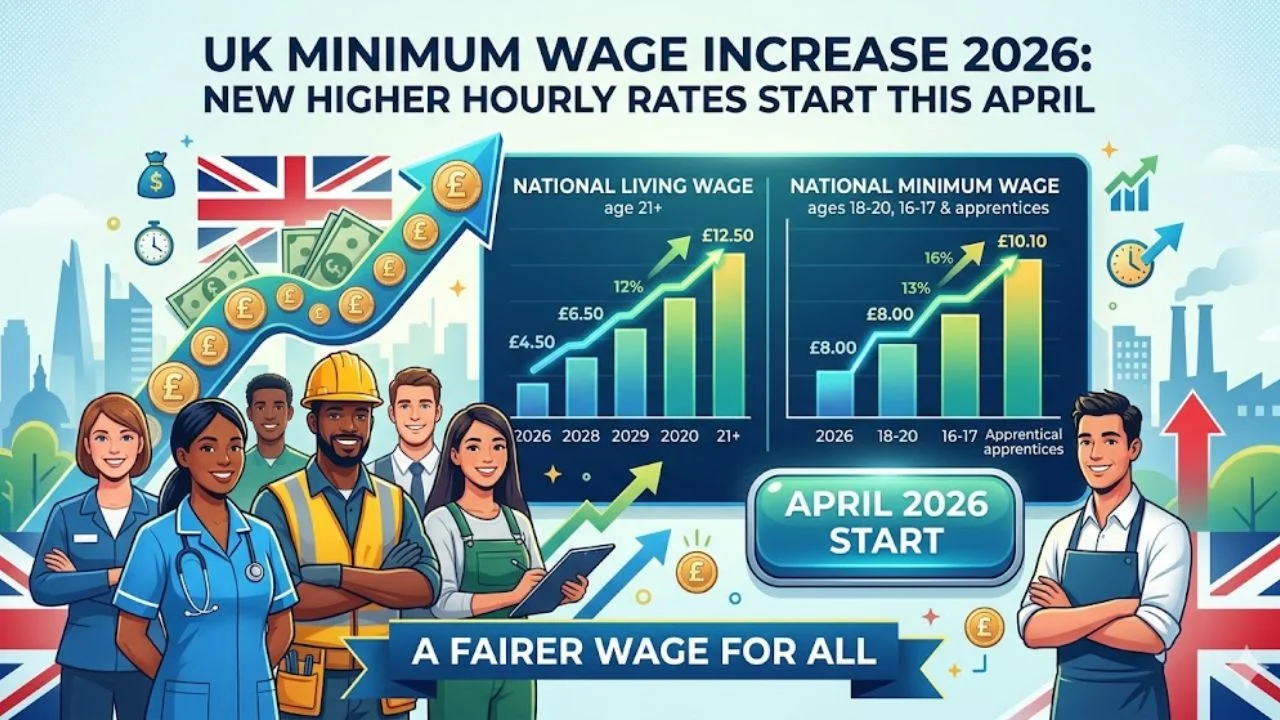
The new rates that apply from 1 April 2026 are:
- 21 and over: £12.71 per hour
- 18 to 20: £10.85 per hour
- 16 to 17: £8.00 per hour
- Apprentice rate: £8.00 per hour
The apprentice rate usually applies if the worker is under 19, or if they are 19 or over and still in the first year of their apprenticeship. After that, they are normally entitled to the minimum wage for their age.
Why the increase matters
A higher wage floor means more money per hour, but the real question for most workers is whether it makes daily life feel easier. For people paying rent, transport, food bills and everything else that seems to keep rising, even a pay increase can disappear quickly once the month gets going.
Still, this rise is meaningful for low-paid workers. It especially matters to anyone moving into a new age band, because turning 21 can now make a bigger difference to hourly earnings than it did a few years ago.
Who gets the National Living Wage?
In the UK, workers aged 21 and over are entitled to the National Living Wage. Workers under 21 fall under different National Minimum Wage bands, and apprentices may be entitled to the apprentice rate depending on their age and how far into the apprenticeship they are.
This is one of those details people often overlook. Two people doing similar work in the same place can legally be on different minimum rates simply because of their age or apprenticeship status.
What workers should do now
If you are paid hourly, check your payslip and make sure your rate has actually changed. A lot of people assume payroll has handled it correctly, and often it has, but it is still worth checking.
- Confirm your current hourly rate
- Check your age band
- Check whether you are classed as an apprentice
- Make sure the new rate is reflected from your April pay period
If the numbers do not look right, raise it early rather than waiting months to notice something is off.
What employers should think about
For employers, this is not just a payroll update. It affects margins, staffing costs, scheduling, pricing and in some sectors whether growth still feels realistic.
Businesses in hospitality, retail, care, warehousing and other labour-heavy sectors will feel the increase most clearly. Some firms will absorb the cost. Others will try to offset it through higher prices, tighter staffing or productivity changes.
Does a pay rise always feel like a win?
Not always. That is the uncomfortable truth. If prices keep rising quickly, workers may feel they are earning more without actually feeling better off.
That is why wage stories are never just about wages. They are also about inflation, cost of living and whether the extra money still holds its value by the time it reaches your pocket.
Final thought
The 2026 minimum wage increase is clearly important, and for many workers it will be a genuine help. But it also highlights a bigger reality: higher hourly pay matters most when it is not being swallowed up just as fast by everyday costs.
Keep reading
Tap 👏 to show appreciation
Want more searchable money and business explainers?
Read our latest breakdowns on inflation, work, business, and the stories shaping everyday finances.
Explore More Articles