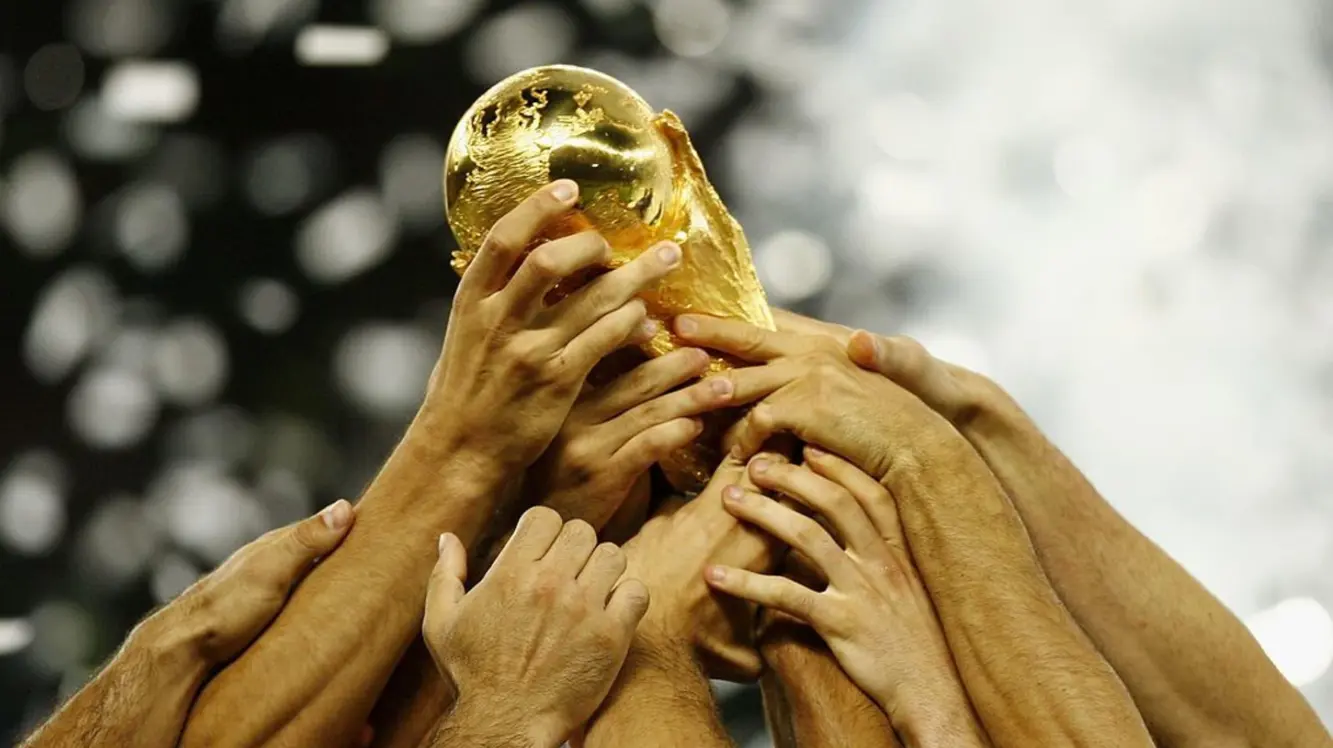
Winning the World Cup is the dream of almost every footballer.
The trophy.
The national pride.
The celebrations back home.
The moment a player becomes part of football history forever.
But behind the glory, there is another question many fans quietly ask:
How much money do World Cup winners actually earn?
The answer is bigger than most people think — but also more complicated than it looks.
For the 2026 FIFA World Cup, the winning nation is set to receive $50 million in prize money.
That sounds like a huge amount of money.
And it is.
But here is the part many fans do not realise: that money does not simply go straight into the players’ bank accounts.
The prize money is paid to the national football association.
After that, each country decides how the money is shared between players, coaches, staff, and the wider football federation.
So when people ask, “How much do World Cup winners earn?” the real answer is not just one simple number.
The Prize Money for Winning the World Cup
The 2026 FIFA World Cup is the biggest World Cup ever, with 48 teams competing across the United States, Canada, and Mexico
FIFA has confirmed that the 2026 champions will receive $50 million.
The runners-up will receive $33 million.
The third-place team will receive $29 million.
The fourth-place team will receive $27 million.
Even teams that do not go far still earn money simply for qualifying and taking part.
That is why the World Cup is not just a sporting competition.
It is a major financial even
What Happened at the 2022 World Cup?
At the 2022 FIFA World Cup in Qatar, Argentina won the tournament and received $42 million in prize money.
France, who finished as runners-up, received $30 million.
Croatia received $27 million for finishing third.
Morocco received $25 million for finishing fourth.
Those numbers show how much the money increases the deeper a country goes in the tournament.
For football associations, reaching the later stages of the World Cup is not just about pride.
It can also be worth millions.
Do the Players Get All the Money?
No.
This is one of the biggest misunderstandings about World Cup prize money.
When FIFA pays prize money, it pays the national football association, not the players directly.
For example, if a team wins $50 million, that money goes to the football federation of that country.
From there, the federation may pay bonuses to the players and coaching staff based on agreements made before the tournament.
Some countries pay large bonuses.
Some countries pay smaller bonuses.
Some players may even donate part of their bonuses to charity.
Some federations use part of the money to fund youth football, facilities, training, travel, staff, administration, and future tournaments.
So the headline figure is not the same as the amount each player takes home.
So How Much Can Each Player Earn?
This depends on the country.
Each national team has its own bonus agreement.
Players may receive money for qualifying, winning matches, reaching the knockout stage, reaching the semi-finals, reaching the final, or winning the tournament.
For a World Cup-winning squad, individual bonuses can be worth hundreds of thousands of dollars per player, sometimes more depending on the country.
But for the biggest football stars, the official bonus may not even be the biggest financial reward.
The real money often comes after the tournament.
The Real Money Comes After the Trophy
Winning the World Cup can change a player’s financial life in ways that go far beyond prize money.
A player who performs well on the biggest stage can attract new sponsorship deals.
His shirt sales can rise.
His social media following can explode.
His club value can increase.
His next contract negotiation can become much stronger.
For some players, one great World Cup can be worth more than the official bonus itself.
That is because the World Cup does not only pay in prize money.
It pays in visibility.
And visibility creates opportunity.
The World Cup Turns Players Into Brands
Before a tournament, a player may be known mainly by fans of his club or country.
But one great World Cup can put his name in front of the whole world.
Suddenly, millions of people know him.
Brands want him.
Clubs want him.
Fans want his shirt.
Media companies want interviews.
That is when a footballer starts becoming more than an athlete.
He becomes a commercial asset.
This is the hidden financial power of the World Cup.
The trophy brings glory.
But the attention around the trophy can bring long-term wealth.
What About the Clubs?
Clubs also benefit from the World Cup.
When club players are released to represent their countries, FIFA has a system that pays clubs through the Club Benefits Programme.
This means clubs can receive money when their players take part in the World Cup.
It makes sense when you think about it.
Clubs pay the players’ salaries for most of the year.
Then during the World Cup, those players represent their countries and help create attention for the global tournament.
So the football money does not only flow to FIFA and national teams.
It also reaches clubs around the world.
Why World Cup Prize Money Keeps Growing
World Cup prize money keeps growing because the tournament keeps getting bigger.
More teams.
More matches.
More viewers.
More sponsors.
More broadcasting deals.
More global attention.
And in business, attention is money.
The World Cup is one of the few events that can bring billions of people together around the same story.
That is why companies want to be part of it.
That is why broadcasters pay heavily for it.
That is why sponsors fight for visibility around it.
And that is why the winners earn so much.
The Money Lesson
The World Cup teaches a powerful money lesson.
The people who win are not only the people who lift the trophy.
The broadcasters win.
The sponsors win.
The shirt manufacturers win.
The host cities win.
Hotels, airlines, restaurants, advertisers, and media platforms all get a piece of the attention.
And of course, the winning team earns prize money, bonuses, status, and history.
That is what makes the World Cup so powerful.
It is football on the surface.
But underneath, it is one of the biggest money machines in sport.
Final Thought
So how much do World Cup winners earn?
Officially, the 2026 World Cup winners are set to receive $50 million in prize money.
But the real value of winning the World Cup can be much bigger than that.
There are player bonuses.
There are sponsorship deals.
There are shirt sales.
There are bigger contracts.
There is fame, status, and global attention.
For fans, the World Cup is about emotion.
For players, it is about legacy.
But for the football business, it is also about money.
Because when the world is watching, value is being created.
And when a team lifts the World Cup trophy, they are not just lifting football’s biggest prize.
They are lifting one of the most valuable trophies in world sport.
Keep reading
Tap 👏 to show appreciation
Want more money stories like this?
Join MoneyJist and learn how money really works behind the stories people already care about.
Join Free →